How Digital Marketing Funnels Actually Work

Unlock hidden revenue! Learn how to fix the 'Visibility Gap' in your marketing funnel with SEO, SEM, and optimization strategies.
The 90% Visibility Gap: Why Your Marketing Funnel is Leaking Leads
90% of potential customers who recognize they have a problem *never* actively search for a solution. This isn’t speculation; it’s a statistic consistently observed across industries, and it highlights a critical flaw in how most marketing funnels are constructed. You’re likely focusing on the 10% actively seeking, while a massive opportunity – and potential revenue – is slipping through the cracks. This article dissects why this “Visibility Gap” exists and how to plug the leaks using a strategic blend of SEO, SEM, and funnel optimization.
Publicité
Understanding the Traditional Funnel – And Where It Fails
The classic marketing funnel (Awareness, Interest, Desire, Action – AIDA) assumes a linear journey. Someone *becomes aware* of a problem, *develops interest* in solutions, *feels desire* for your offering, and finally takes *action* (conversion). However, this model drastically underestimates the importance of passive awareness. Most businesses pour resources into bottom-of-funnel activities – paid advertising (SEM) targeting specific keywords, conversion rate optimization (CRO) on landing pages – assuming the top of the funnel is adequately filled. It’s like meticulously crafting a perfect checkout experience for a store nobody knows exists.
The Visibility Gap: A Breakdown
The 90% aren’t ignoring their problems; they’re unaware of *solutions* like yours. They’re scrolling social media, reading news, consuming content – but not actively Googling “best CRM for small business” (yet). This is where branding and a robust content strategy, fueled by SEO, become paramount. Here’s how the gap manifests:
- Lack of Brand Recall: Without consistent exposure, your brand isn’t top-of-mind when a need arises. Think about Coca-Cola’s global branding dominance – it’s not just about advertising, it’s about pervasive presence.
- Untapped Keyword Potential: You’re likely targeting “transactional keywords” (e.g., “buy running shoes”). But what about “informational keywords” (e.g., “how to prevent running injuries”)? These attract the 90% and build trust.
- Social Media Blind Spots: Relying solely on organic social reach is insufficient. Algorithm changes (like those constantly implemented by Meta) drastically limit visibility. Strategic social media advertising, aligned with your SEO keyword research, is crucial.
- Funnel Disconnect: Your funnel isn’t a single entity. It’s a series of interconnected experiences. A blog post attracting a reader with an informational keyword needs a clear pathway to a lead magnet (e.g., a downloadable guide) to move them further down the funnel.
Plugging the Leaks: A Practical Plan
Here’s how to address the Visibility Gap: 1. Keyword Expansion: Utilize tools like SEMrush or Ahrefs to identify long-tail keywords and informational queries related to your industry. Focus on content that *answers* questions, not just sells products. 2. Content Marketing Blitz: Create high-quality blog posts, videos, infographics, and podcasts addressing these informational keywords. Optimize for SEO (on-page and off-page). 3. Strategic SEM: Run targeted ad campaigns on Google Ads and social media platforms, focusing on both transactional *and* informational keywords. Use retargeting to re-engage users who’ve interacted with your content. 4. Funnel Integration: Ensure every piece of content has a clear call-to-action (CTA) leading to a valuable lead magnet. Track conversion rates at each stage of the funnel to identify bottlenecks. A/B test different CTAs and landing page designs. 5. Branding Consistency: Maintain a consistent brand voice and visual identity across all channels. This builds trust and recognition, increasing brand recall. Consider cultural nuances when expanding into new global markets – what resonates in the US might not in Japan.
Measuring Success Beyond Conversion Rate
Don’t solely focus on conversion rate. Track metrics like:
- Organic Traffic: Indicates the effectiveness of your SEO efforts.
- Brand Mentions: Reflects brand awareness and sentiment.
- Time on Page/Bounce Rate: Signals content engagement.
- Cost Per Acquisition (CPA): Measures the efficiency of your marketing spend.
Addressing the 90% Visibility Gap isn’t about abandoning your existing funnel; it’s about *expanding* it to capture a far larger audience. By prioritizing awareness and providing valuable content, you can transform passive observers into engaged leads and ultimately, loyal customers.
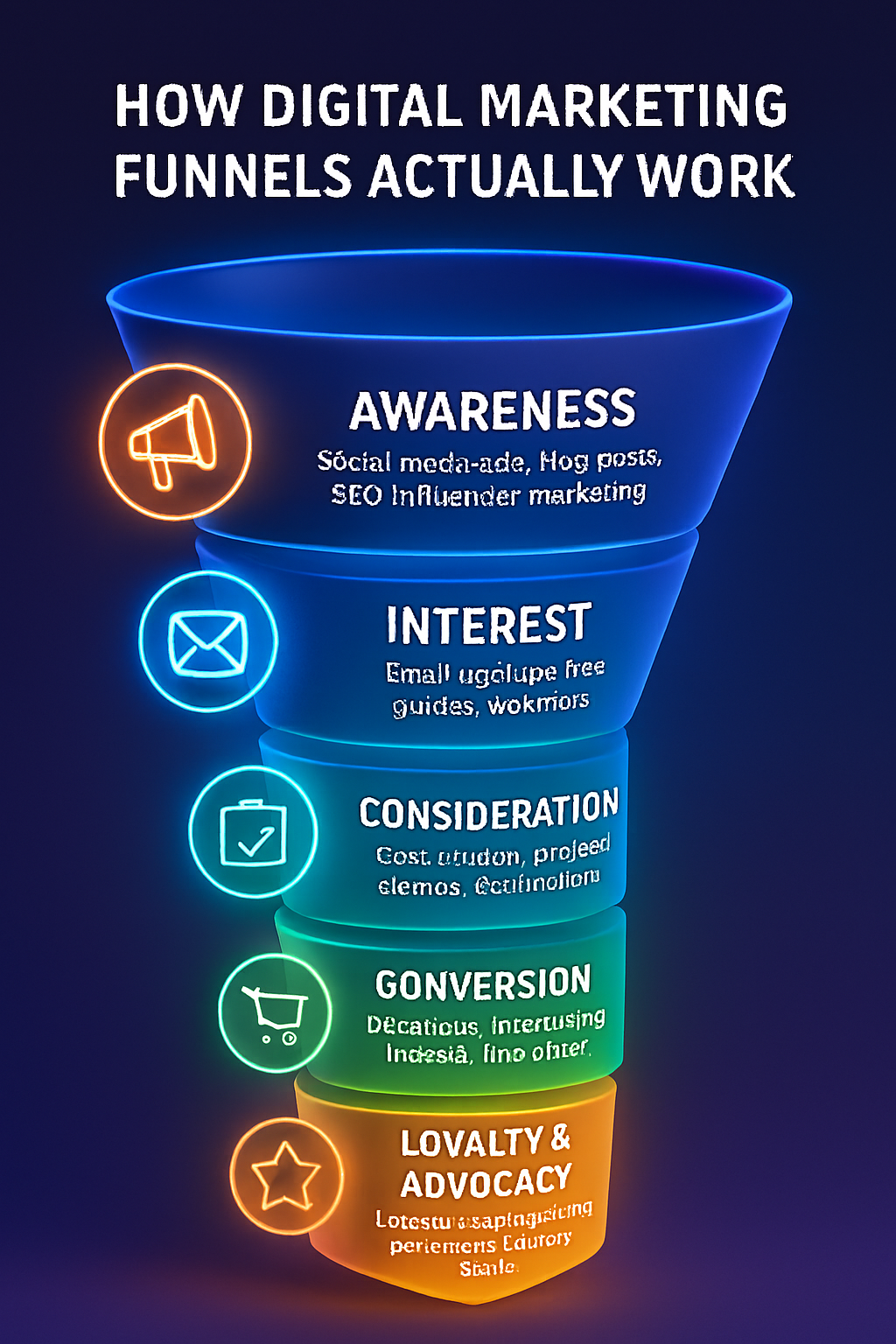
From Click to Customer: Deconstructing the Digital Marketing Funnel Stages
88% of consumers research online *before* making a purchase, even if that purchase happens offline. This statistic underscores the critical importance of understanding the digital marketing funnel – not as a theoretical concept, but as a blueprint for converting online interactions into revenue. Forget broad strokes; let's dissect each stage, focusing on actionable tactics leveraging SEO, SEM, and current social media trends.
1. Awareness: The Top of the Funnel (TOFU) - Building Visibility
This stage is about getting noticed. Think of it as casting a wide net. The primary goal isn’t immediate sales, but brand recognition and attracting potential customers.
- SEO is King: Targeting long-tail keywords relevant to your niche is paramount. Consider the EU’s General Data Protection Regulation (GDPR) when implementing tracking; transparency builds trust. Content should answer questions your target audience is *actively* searching for. A blog post addressing “Best sustainable travel options in Europe” (targeting a growing eco-conscious demographic) is a prime example.
- Social Media Trends: Leverage platforms like TikTok and Instagram Reels. Short-form video content, particularly user-generated content, boasts significantly higher engagement rates. Influencer marketing, when strategically aligned with your brand, can rapidly expand reach. Monitor trending hashtags – but ensure relevance!
- SEM (PPC): Google Ads, particularly Search campaigns, are crucial for immediate visibility. Focus on broad match modifiers and dynamic search ads to capture a wider range of relevant searches. A/B test ad copy relentlessly.
2. Interest: The Middle of the Funnel (MOFU) - Nurturing Leads
Once you’ve captured attention, you need to cultivate interest. This is where lead magnets come into play.
- Content Marketing Deep Dive: Move beyond blog posts. Offer downloadable ebooks, whitepapers, webinars, or free tools. For example, a financial services company could offer a free retirement planning calculator. This requires capturing contact information – a crucial step in lead generation.
- Email Marketing Automation: Segment your email list based on user behavior (e.g., content downloaded, pages visited). Automated email sequences nurture leads with targeted content, building trust and demonstrating value. Compliance with CAN-SPAM Act (US) and similar regulations globally is non-negotiable.
- Remarketing/Retargeting: Utilize Google Ads and social media pixels to show ads to users who have previously interacted with your website. This keeps your brand top-of-mind and encourages further engagement.
3. Decision: The Bottom of the Funnel (BOFU) - Driving Conversions
This is where prospects become customers. Focus shifts to demonstrating why *your* solution is the best.
- Case Studies & Testimonials: Social proof is incredibly powerful. Showcase successful customer stories and quantifiable results. Highlight ROI (Return on Investment) whenever possible.
- Free Trials/Demos: Allow potential customers to experience the value of your product or service firsthand. This reduces perceived risk and accelerates the decision-making process.
- Conversion Rate Optimization (CRO): Analyze your website’s landing pages and checkout process. A/B test different elements (headlines, calls-to-action, form fields) to identify what drives the highest conversion rates. Even a 1% improvement in conversion rate can significantly impact revenue.
- Limited-Time Offers: Creating a sense of urgency can incentivize immediate purchase.
4. Action/Loyalty: Beyond the Sale - Retention & Advocacy
The funnel doesn’t end with the first purchase. Focus on customer retention and turning customers into brand advocates.
- Post-Purchase Email Sequences: Thank customers for their purchase, provide helpful resources, and solicit feedback.
- Loyalty Programs: Reward repeat customers with exclusive discounts, early access to new products, or other perks.
- Social Media Engagement: Respond to customer comments and questions promptly. Encourage user-generated content and build a community around your brand.
Understanding and optimizing each stage of the digital marketing funnel is not a one-time task. It requires continuous monitoring, analysis, and adaptation based on data and evolving consumer behavior. Ignoring any stage weakens the entire system, leading to wasted marketing spend and missed opportunities.
Supercharge Conversions: SEO, SEM & Funnel Optimization Tactics
Did you know that businesses lose an average of 20-40% of potential leads due to poorly optimized conversion funnels? This isn’t just about traffic; it’s about turning that traffic into revenue. Let’s dissect how to leverage SEO, SEM, and funnel optimization to drastically improve your conversion rates, focusing on actionable tactics.
SEO as the Top-of-Funnel Magnet
SEO isn’t just about ranking #1 for keywords; it’s about attracting *qualified* traffic – users actively searching for solutions you provide. Think of it as building a sustainable, organic lead generation engine.
- Keyword Research Beyond Volume: Don’t solely focus on high-volume keywords. Prioritize long-tail keywords (e.g., “best sustainable running shoes for plantar fasciitis”) with lower competition and higher intent. Tools like SEMrush or Ahrefs are crucial here. Consider regional variations – a search for “plumber” in London, UK, will yield different results than in New York, USA.
- Content Clustering & Topical Authority: Google’s algorithm increasingly favors websites demonstrating *topical authority*. Create content clusters around core themes. For example, if you sell financial planning services (relevant to regulations like MiFID II in the EU), create a cluster around “retirement planning,” including articles on pensions, investments, and estate planning.
- Technical SEO Audit: A slow website (page speed exceeding 3 seconds is a conversion killer) or poor mobile-friendliness (critical given mobile-first indexing) will negate even the best content. Use Google’s PageSpeed Insights and Mobile-Friendly Test. Ensure proper schema markup for rich snippets.
SEM: Accelerating the Funnel with Targeted Ads
While SEO builds long-term organic growth, SEM (primarily Google Ads) provides immediate visibility. The key is precision targeting and relentless optimization.
- Remarketing Lists for Search Ads (RLSA): This is a game-changer. Target users who have previously visited your website with tailored search ads. For example, someone who viewed a specific product page can be shown an ad with a discount code for that product. This leverages behavioral data for higher conversion rates.
- Ad Extensions: Utilize all relevant ad extensions – sitelinks, callouts, structured snippets, location extensions, and call extensions. These increase ad real estate and provide more information to potential customers. Consider using price extensions to showcase competitive pricing (especially important in price-sensitive markets like consumer electronics).
- A/B Testing Ad Copy: Continuously test different ad headlines, descriptions, and calls to action. Small changes can have a significant impact on click-through rates (CTR) and conversion rates. Focus on benefit-driven copy, not just features.
Funnel Optimization: Stitching it All Together
SEO and SEM drive traffic, but the funnel determines whether that traffic converts.
- Landing Page Optimization (LPO): Each ad campaign should direct users to a dedicated landing page, not just your homepage. The landing page should be laser-focused on the ad’s message and offer a clear call to action (CTA). A/B test different headline variations, images, and form fields. Consider using heatmaps (e.g., Hotjar) to understand user behavior.
- Cart Abandonment Recovery: For e-commerce businesses, cart abandonment is a major revenue leak. Implement automated email sequences to remind customers about their abandoned carts, offering incentives like free shipping or a small discount. GDPR compliance is crucial when collecting and using email addresses.
- Conversion Rate Optimization (CRO) Frameworks: Employ CRO frameworks like the RACE framework (Reach, Act, Convert, Engage) to systematically analyze and improve each stage of the funnel. Track key metrics like bounce rate, time on page, and conversion rate at each stage.
By integrating these SEO, SEM, and funnel optimization tactics, you’re not just driving traffic; you’re building a conversion machine. Remember, data-driven decision-making is paramount. Continuously analyze your results, iterate on your strategies, and stay ahead of the ever-evolving digital marketing landscape.
Beyond the Funnel: Predictive Analytics & the Future of Growth Hacking
80% of consumers are more likely to make a purchase when brands personalize their experience. This isn’t about simply using a first name in an email; it’s about anticipating needs before they’re expressed. This shift from reactive to proactive marketing is driven by predictive analytics, and it’s fundamentally reshaping growth hacking strategies.
The Limitations of Traditional Funnel Analysis
While the AIDA (Awareness, Interest, Desire, Action) funnel remains a foundational concept, relying solely on historical conversion data provides a lagging indicator. Analyzing past Conversion Rates at each stage – say, a 5% click-through rate from ad to landing page, or a 2% lead-to-customer rate – tells you what happened, not why, and certainly not what will happen. This is where predictive analytics steps in. It moves beyond descriptive analytics (what happened) and diagnostic analytics (why it happened) to focus on prescriptive analytics – what actions should be taken.
Predictive Analytics: Tools & Techniques
Several techniques are powering this evolution. Here are a few key areas:
- Machine Learning (ML): Algorithms can identify patterns in user behavior – browsing history, purchase patterns, social media engagement – to predict future actions. For example, ML can predict which users are most likely to churn (cancel a subscription) based on their recent activity, allowing for targeted retention campaigns. This is particularly crucial in subscription-based economies like those seen with Spotify (Sweden) or Netflix (US).
- Customer Lifetime Value (CLTV) Prediction: Instead of treating all customers equally, predictive models can estimate the future revenue a customer will generate. This allows for optimized SEM spend, focusing on acquiring high-CLTV customers even if their initial acquisition cost is higher. Consider the impact on ROI when targeting users in high-income brackets within the EU, versus a broader, less targeted approach.
- Attribution Modeling Beyond Last-Click: Traditional attribution models often credit the last touchpoint before a conversion. Predictive attribution uses data science to distribute credit across all touchpoints, revealing the true impact of each channel – SEO, social media, email marketing – on the customer journey. This is vital for accurate budget allocation.
- Propensity Modeling: Predicting the probability of a user taking a specific action, like downloading an ebook, requesting a demo, or making a purchase. This allows for hyper-personalized messaging and offers.
Growth Hacking in the Age of Prediction
Growth hacking is no longer about finding quick wins; it’s about building sustainable growth engines powered by data. Here’s how predictive analytics transforms the process:
- Personalized Onboarding: Tailoring the onboarding experience based on predicted user needs. A user identified as a “power user” through ML might receive advanced feature tutorials, while a “beginner” receives simplified guidance.
- Dynamic Pricing & Offers: Adjusting prices and offers in real-time based on individual user behavior and predicted willingness to pay. This is common in the travel industry (e.g., airline ticket pricing) and increasingly in e-commerce.
- Proactive Customer Support: Identifying users at risk of experiencing issues and proactively offering assistance. This reduces churn and improves customer satisfaction.
- Content Optimization: Predicting which content will resonate with specific user segments, maximizing engagement and Branding impact.
The Ethical Considerations & Future Landscape
The use of predictive analytics raises ethical concerns around data privacy (GDPR in Europe, CCPA in California) and potential bias in algorithms. Transparency and responsible data handling are paramount. Looking ahead, expect to see increased integration of AI-powered tools into marketing platforms, making predictive analytics accessible to even small businesses. The future of growth hacking isn’t about *finding* the funnel; it’s about *building* a personalized experience that anticipates and fulfills customer needs before they even realize them.
Don't miss the next update!
Join our community and get exclusive Python tips and DzSmartEduc offers directly in your inbox.
No spam, unsubscribe anytime.
💬 Comments (0)
No comments yet — be the first!
✍️ Leave a comment
Similar Articles
- Landing Page Mistakes That Kill Sales 13/02/2026 • 7724
- Marketing Funnels Explained for Non-Marketers 09/02/2026 • 10941
- Building a Sustainable Lead Generation System 22/02/2026 • 10412
- SEO vs Paid Traffic: Cost and Performance 22/02/2026 • 10241
- Content Marketing for Long-Term Growth 21/02/2026 • 8765
 Notifications